
What is healthy BMI and how much it is accurate?
Understand what your BMI number means, when you can call it accurate? and when it can mislead?
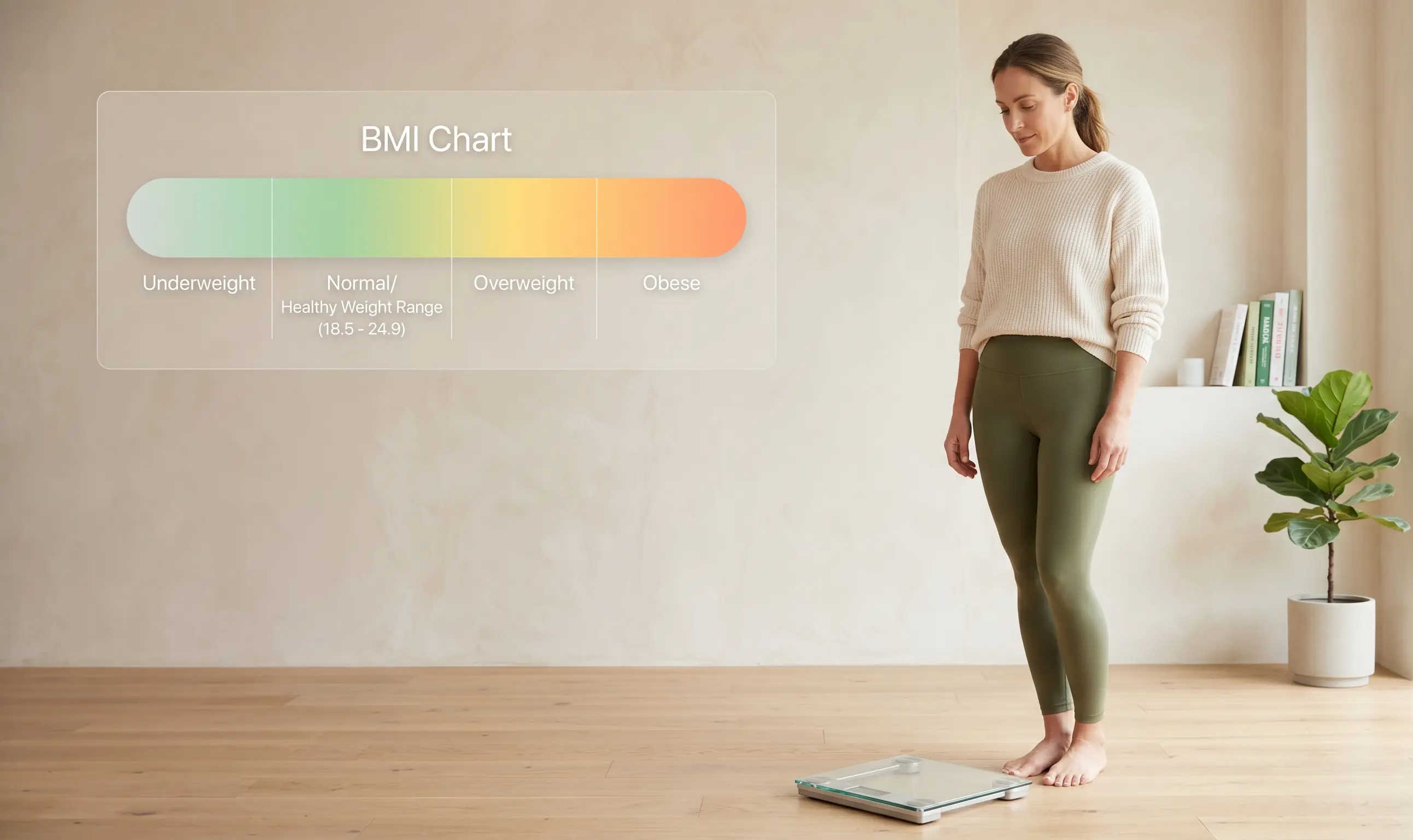
Does your BMI calculator provide you an actual image of your body? Is your BMI number is accurate? What your BMI number indicates? Questions like these are asked millions of times by people but your body's health is dependent on many parameters not just by height and weight. And BMI has many limitations, complete guide on BMI is given below.
BMI was developed by Belgian mathematician adolphe quetelet in the 19th century and gave standards to measure BMI. Later WHO (World Health Organization) has adopted it as a standard screening tool because it is simple to calculate and it also correlates with body fat percentage.
How BMI is calculated
In metrics unit: weight(kg) ÷ height(m)² In imperial unit: weight(lbs) ÷ height(inches)² × 703
For example, if you weigh 70kg and 1.75m(175cm) height then your BMI can be calculated as 70 ÷ (1.75 × 1.75) = 22.9, this will fall in normal range.
Use our BMI Calculator to calculate your own BMI instantly.
BMI categories (WHO)
| Category | Range | |---|---| | Severe thinness | <16 | | Moderate thinness | 16-17 | | Mild thinness | 17-18.5 | | Normal | 18.5-25 | | Overweight | 25-30 | | obese class 1 | 30-35 | | obese class 2 | 35-40 | | obese class 3 | >40 |
When BMI is accurate and when BMI misleads
BMI can be accurate and reasonable in following cases:
- If adults have average muscle mass, then BMI can be accurate.
- To track relative weight changes over time.
- Just for initial screening.
BMI can also significantly mislead in following cases:
Athletes and bodybuilders: Athletes and bodybuilders have higher muscle than normal person. So, if you are an athlete or bodybuilder and your BMI is little higher than normal people than it is completely fine because muscle tissue is denser than fat. So, a muscular 90kg man with 12% body fat has same BMI as 90kg man with 28% body fat but both have different health risks. In these cases, BMI is misclassified.
Women: Women naturally carry more weight than men at the same BMI. A woman with BMI of 23 can have 28% body fat while men can have only 12% body fat. In these situations, BMI can be misleading.
Elderly individuals: As age increases muscle mass decreases then an older can have lower muscle mass and higher body fat percentage. In these cases, BMI can be misleading.
BMI vs Body fat percentage
| Category | Essential fat | Athletic | Fitness | Acceptable | Obese | |---|---|---|---|---|---| | Man | 2-5% | 6-13% | 14-17% | 18-24% | 25%+ | | Woman | 10-13% | 14-20% | 21-24% | 25-31% | 32%+ |
Use our Body Fat Calculator uses navy method to estimate body fat from waist, neck, and hip measurements.
How to improve your BMI
Following are few tips to improve your BMI:
Progressive calorie deficit: To reduce body fat prefer 300-500 kcal below maintenance until your BMI is in normal range.
Resistance training: While maintaining your body fat parallelly increase muscle mass, increase BMR.
Adequate protein: Take 1.6-2.2 g/kg per day to preserve muscle mass so you don't get fat.
Sleep and stress management: Cortisol hormone disrupts fat metabolism, so reduce stress and have 7-9 hours of proper sleep.
Use our Ideal Weight Calculator to understand what a healthy weight range looks like and use our Sleep Calculator to schedule proper time of your sleep while maintaining your work. Also refer to our blog on calculating time duration.
Related Articles

Body Fat Percentage Ranges by Age - What Is Healthy for Men and Women?
Healthy body fat percentage range for men and women by age - including the US Navy measurement method, ACE categories, and what your number actually means.

How to Fix a Ruined Sleep Schedule in 2 Days - Science-Backed Methods
How to fix a ruined sleep schedule in 2 days using evidence-based circadian reset techniques - sleep cycles, light exposure, and strategic timing.
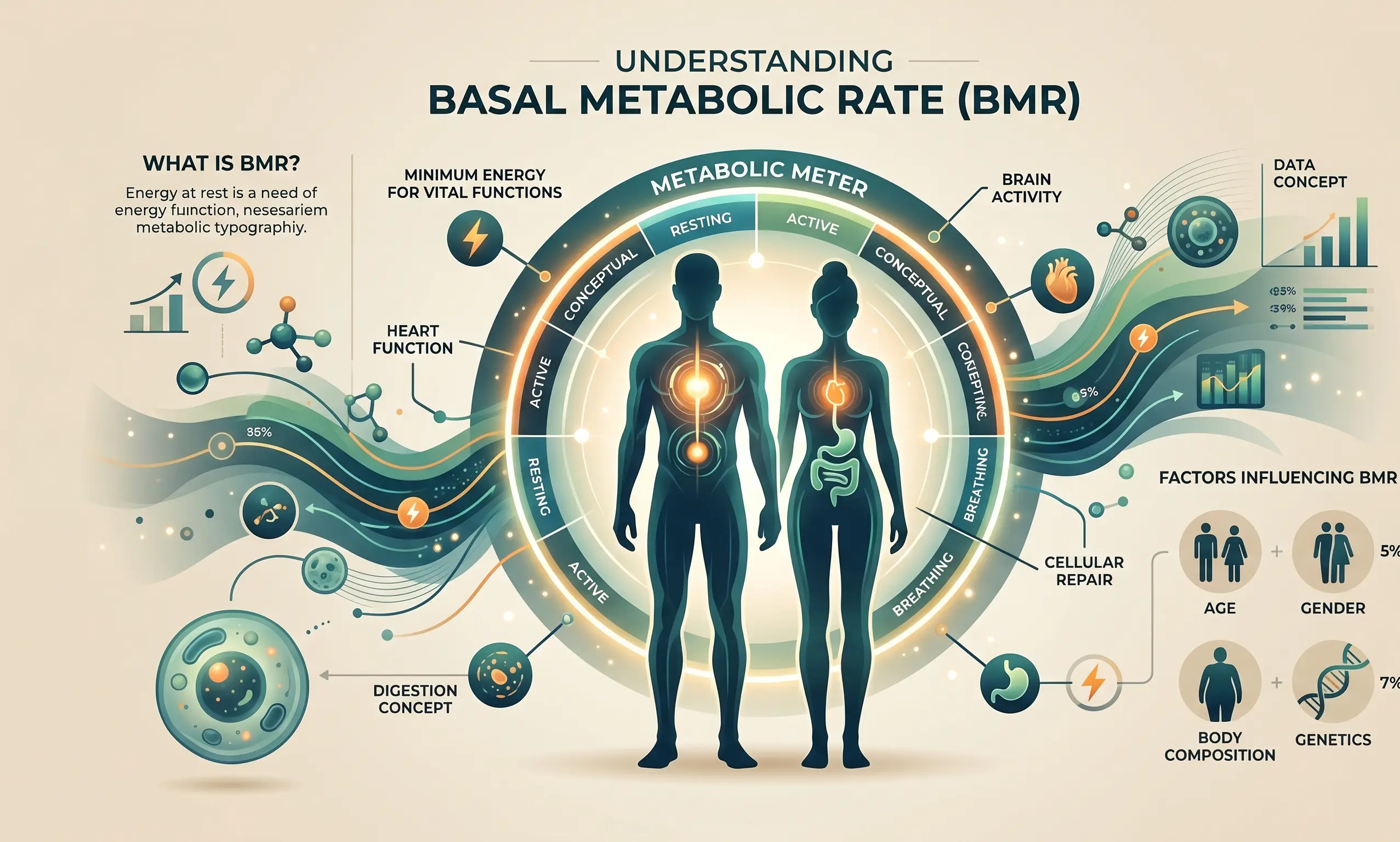
What Is Basal Metabolic Rate and How Do You Increase Your Metabolism?
What is basal metabolic rate and how to increase metabolism naturally - the science behind BMR, what affects it, and evidence-based methods to boost it.