
The Best Macro Split for Body Recomposition - Lose Fat and Build Muscle
The best macro split to lose fat and build muscle at the same time requires precise protein targets, strategic carbohydrates, and a specific calorie approach.
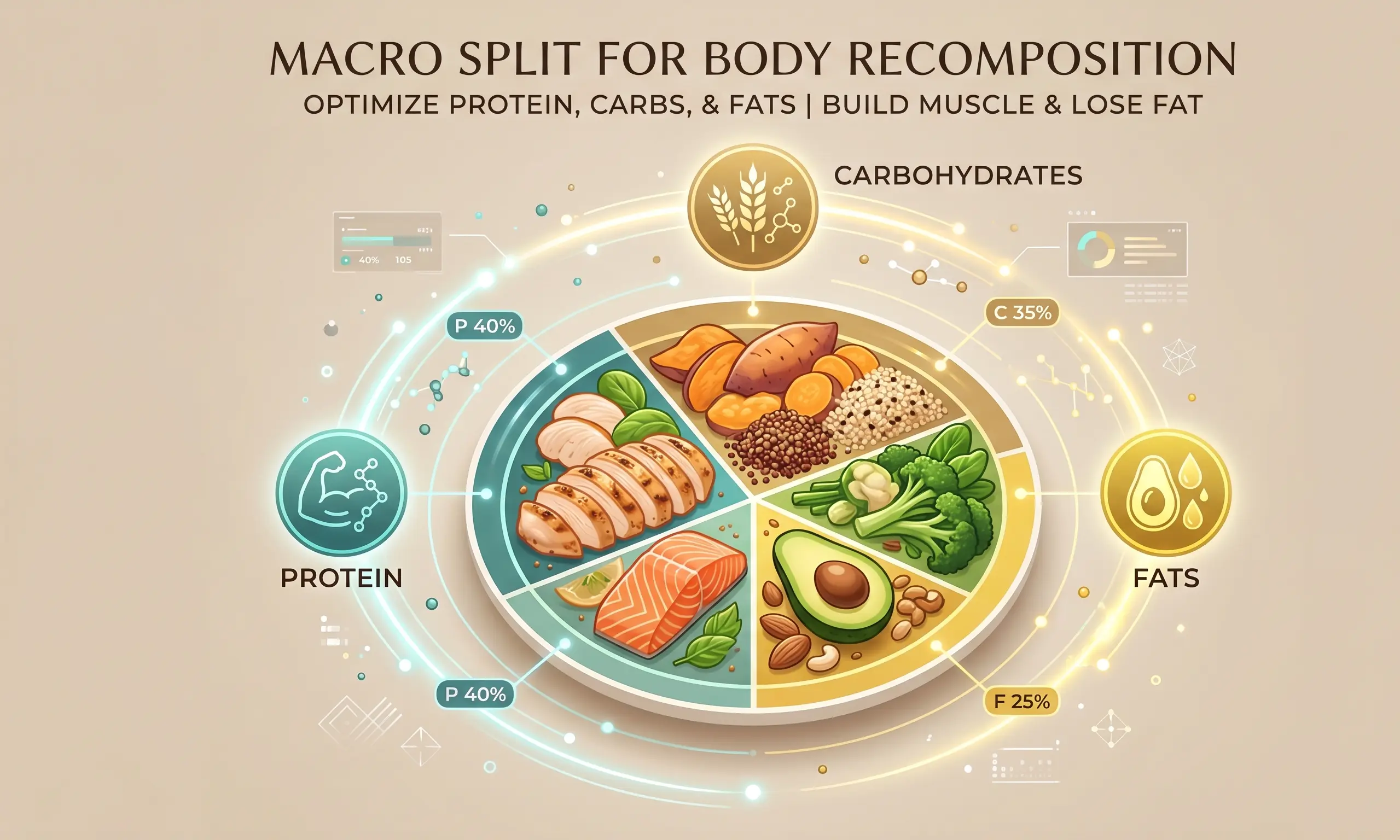
The best macro split to lose fat and build muscle at the same time is a question that occupies countless gym-goers frustrated by the conventional wisdom that you must choose between a "cut" and a "bulk." The truth is that body recomposition - simultaneously losing fat and gaining muscle - is scientifically possible, primarily for two groups: people with above-average body fat, and beginners or returning trainees. For those who qualify, the right macro split is the central lever. Use our free Macro Calculator to calculate your personalised protein, carbohydrate, and fat targets.
Who Can Achieve Body Recomposition?
Body recomposition is most accessible for:
- Beginners (0-2 years of consistent resistance training) - "newbie gains" allow simultaneous muscle growth and fat loss
- Detrained individuals returning after a break - muscle memory dramatically accelerates initial gains
- People with 20%+ body fat (men) or 28%+ (women) - sufficient stored energy to fuel muscle protein synthesis without a calorie surplus
For well-trained individuals with low body fat, true recomposition becomes increasingly difficult, and a traditional periodised approach (bulk/cut cycles) may yield better results.
The Body Recomposition Macro Framework
Protein first - always. Research consistently shows that protein is the single most important macronutrient for body recomposition.
Optimal protein intake: 2.0-2.4 g/kg of body weight per day
This is intentionally at the upper end of evidence-based recommendations (1.6-2.2 g/kg, per a 2017 meta-analysis of 49 studies) because some dietary protein will be used for energy during the mild calorie restriction of recomposition, rather than exclusively for muscle synthesis.
Carbohydrates: moderate to high, prioritised around training
Carbohydrates are glycogen precursors - stored in muscle and liver, they fuel high-intensity training. Reducing carbs too aggressively impairs training quality, which reduces the anabolic stimulus for muscle growth.
Target: 3-5 g/kg/day on training days; slightly lower (2.5-3.5 g/kg) on rest days.
Fat: minimum 25-30% of calories
Dietary fat supports testosterone, oestrogen, and other anabolic hormones. Dropping below 20% of calories from fat has been associated with reduced testosterone in resistance-trained men. Don't sacrifice fat for excess carbohydrates.
The Recomposition Macro Split by Percentage
For a 2,200 kcal daily intake with 80 kg body weight:
| Macronutrient | Percentage | Grams | Calories | |---------------|-----------|-------|---------| | Protein | 30% | 165 g | 660 | | Carbohydrates | 42% | 231 g | 924 | | Fat | 28% | 68 g | 616 | | Total | 100% | | ~2,200 |
How to set calories: For recomposition, use TDEE − 200 to −300 kcal. A larger deficit prioritises fat loss at the expense of muscle gain; a smaller deficit or maintenance calories prioritises muscle gain. For true recomposition, the mild deficit is the balance point.
Use our TDEE Calculator to find your maintenance calories, then subtract 200-300 kcal.
Protein Distribution for Maximum Muscle Protein Synthesis
Total daily protein matters - but so does distribution. Research on muscle protein synthesis (MPS) shows it's a pulsatile process: it spikes in response to a dose of leucine-rich protein and returns to baseline within 3-4 hours.
Optimal distribution: 4-5 protein servings per day, each providing 30-40 g
This maintains elevated MPS throughout the day rather than relying on one or two large protein meals.
| Meal | Target | |------|--------| | Breakfast | 35-40 g protein | | Lunch | 35-40 g protein | | Pre-workout snack | 25-30 g protein | | Dinner | 40-50 g protein | | Evening (optional) | 20-25 g casein |
Carbohydrate Timing for Recomposition
Pre-workout (1-2 hours before training): 30-50 g of complex carbohydrates (oats, rice, sweet potato) top up glycogen and fuel the session. This is when carbs contribute most directly to training performance and the anabolic environment.
Post-workout (within 2 hours): Fast-absorbing carbohydrates alongside protein maximise MPS through an insulin spike. 40-80 g of carbohydrates post-workout is well-supported in the literature.
Rest day reduction: On non-training days, slightly reduce carbohydrates (by 50-80 g) and maintain protein. This cycles your energy balance without disrupting the overall weekly average.
The Role of Fat in Recomposition
Dietary fat should not be sacrificed to create a larger calorie deficit. Beyond its hormonal role, fat provides:
- Fat-soluble vitamins (A, D, E, K) - all critical for recovery and immune function
- Essential fatty acids (omega-3s from oily fish) - linked to reduced muscle soreness and improved insulin sensitivity
- Food palatability - dietary adherence is the most important factor in any nutritional strategy
Include sources of omega-3 fats (salmon, sardines, walnuts, chia seeds) and avoid excessive refined vegetable oils.
Tracking Progress During Recomposition
Body recomposition is notoriously difficult to track on the scale alone, because fat loss and muscle gain can offset each other - weight stays roughly constant while composition improves significantly.
Track these instead:
- Waist circumference - declining = fat loss
- Arm, chest, shoulder measurements - increasing = muscle gain
- Training performance - increasing strength/volume = muscle adaptation
- Monthly progress photos - visual documentation reveals changes the mirror misses daily
Expect the process to take 3-6 months for visible results, and 12-24 months for dramatic transformation.
Frequently Asked Questions
What is the best macro split for fat loss and muscle gain simultaneously? For body recomposition: approximately 30% protein, 42% carbohydrates, and 28% fat, with protein at 2.0-2.4 g/kg/day and calories at TDEE minus 200-300 kcal. This is the sweet spot between anabolic and lipolytic conditions.
How much protein do I need for body recomposition? 2.0-2.4 g per kg of body weight per day. For a 75 kg person, that's 150-180 g of protein daily, distributed across 4-5 meals.
Should I be in a calorie deficit for body recomposition? A mild deficit of 200-300 kcal below TDEE is optimal for most people attempting recomposition. Too large a deficit prioritises fat loss over muscle gain; maintenance calories or a surplus prioritises muscle gain. The mild deficit is the balance point for simultaneous adaptation.
Can you do body recomposition as a natural (drug-free) athlete? Yes, though the rate of recomposition is slower than for those using performance-enhancing drugs. Beginners see the fastest results; advanced trainees should manage expectations - natural recomposition at an advanced level is slow but achievable.
Is carb cycling necessary for body recomposition? Not necessary, but beneficial for maintaining training performance while in a mild deficit. Simple carb cycling (higher carbs on training days, lower on rest days) is an accessible strategy that improves body composition outcomes.
Sources & Further Reading
RECOMMENDED TOOL
Ready to calculate?
Related Articles

How Much Water Should You Drink While Taking Creatine?
How much water should I drink while taking creatine - the research-backed answer explaining creatine's effect on water distribution and your personalised hydration target.

How Much Water Should I Drink While Taking Creatine?
Creatine increases intracellular water retention. Here's exactly how to adjust your hydration when supplementing - and why it matters for performance and safety.
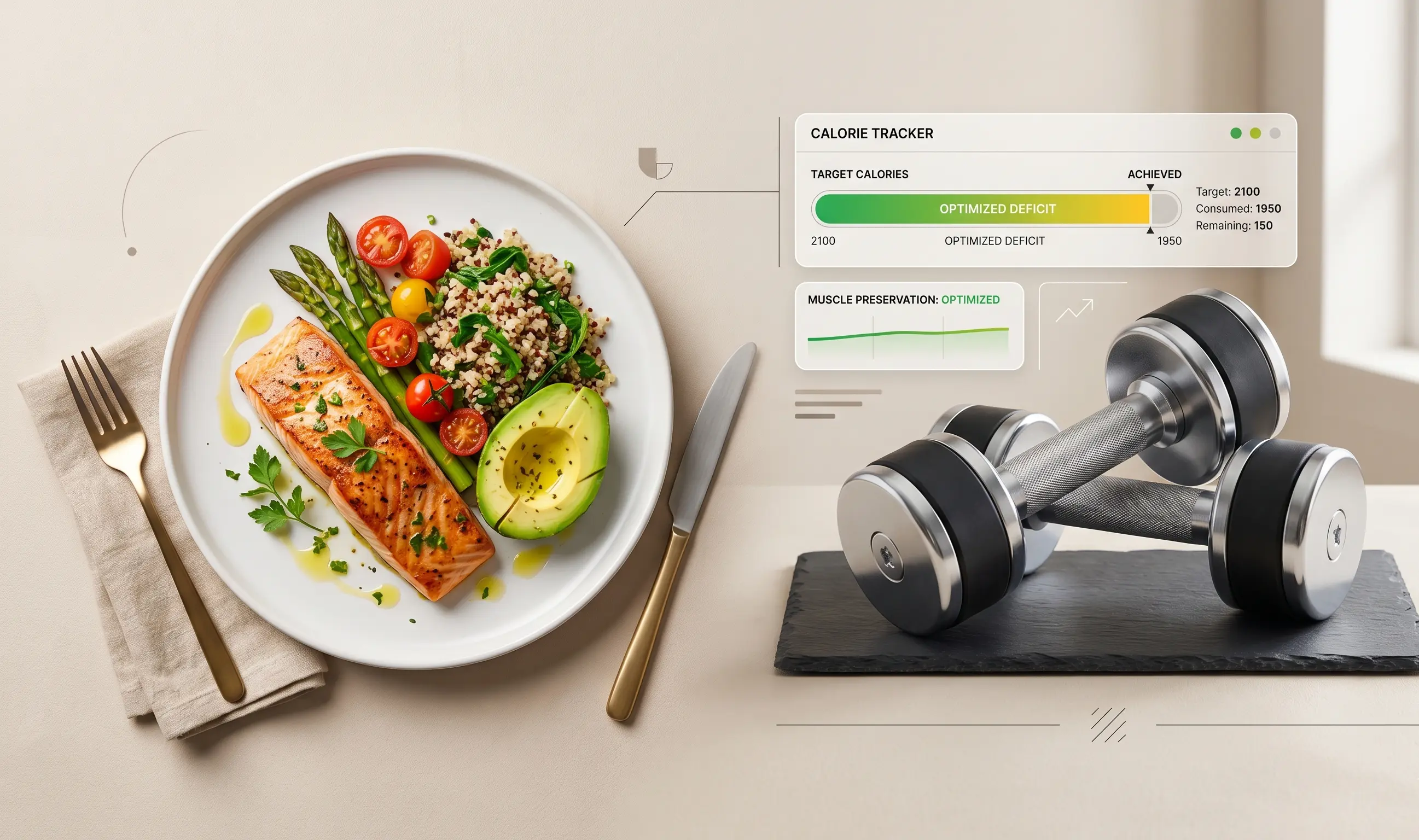
How Many Calories Should You Eat to Lose Weight Without Losing Muscle?
How many calories should I eat to lose weight without losing muscle - the science-backed answer using TDEE, protein targets, and sustainable deficit strategies.