
How Much Water Should You Drink While Taking Creatine?
How much water should I drink while taking creatine - the research-backed answer explaining creatine's effect on water distribution and your personalised hydration target.
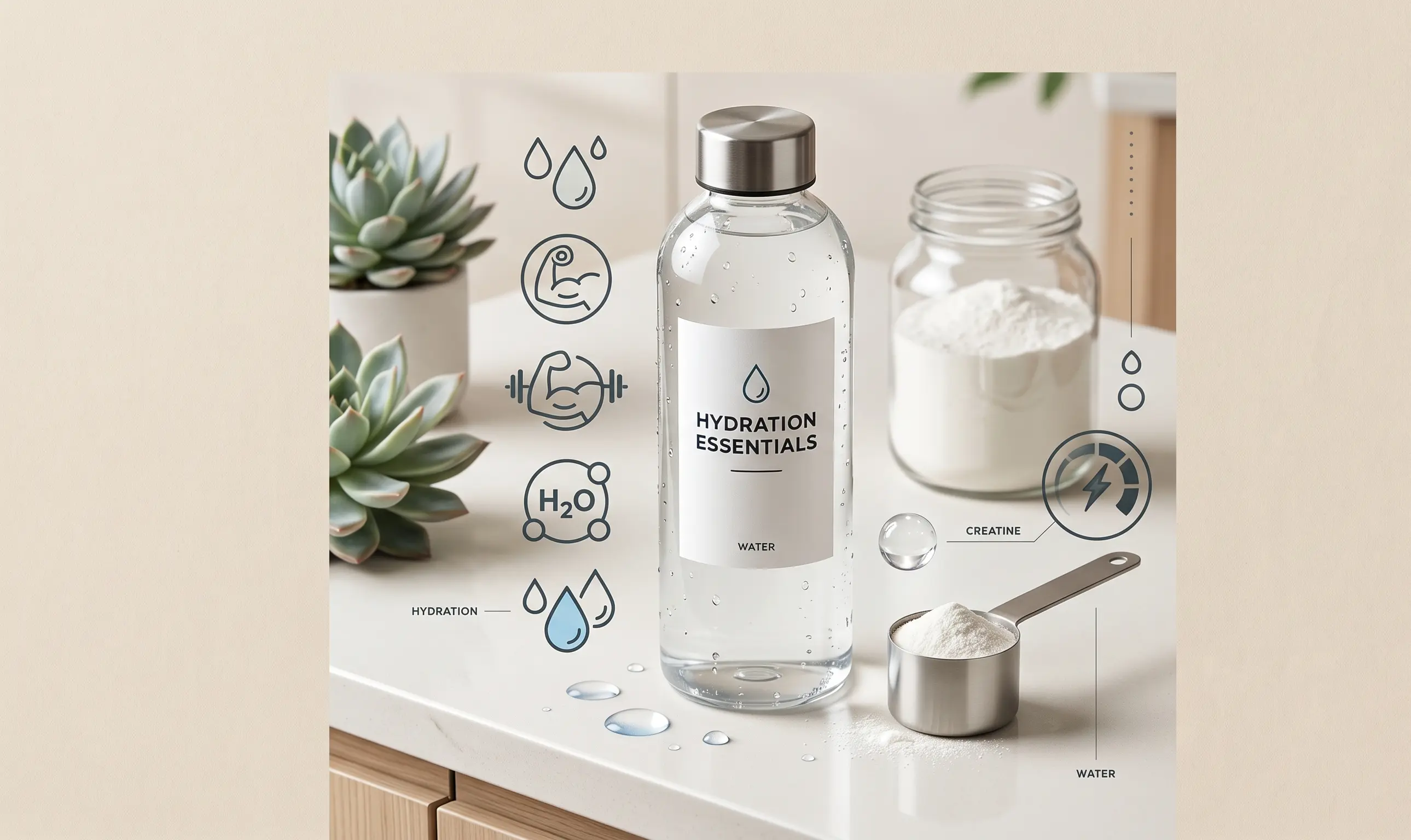
How much water should I drink while taking creatine is a question asked by millions of people starting this supplement - and the answer matters for both effectiveness and safety. Creatine is the most extensively researched sports supplement available, with over 500 clinical studies confirming its safety and efficacy for strength, power, and muscle mass. But it does alter water distribution in the body in a way that requires deliberate hydration management.
The short answer: add 500-1,000 mL of water per day during loading, and 250-500 mL during maintenance, on top of your standard daily intake. Use our free Water Intake Calculator to calculate your baseline hydration needs, then apply the creatine adjustment explained below.
How Creatine Affects Your Body's Water Distribution
Creatine is stored in muscle cells as phosphocreatine - an energy buffer for short, explosive efforts (1-10 seconds: heavy lifts, sprints). When you supplement, your muscles store significantly more phosphocreatine. Crucially, creatine is stored intracellularly - inside muscle cells - bound to water through osmosis.
For every gram of creatine stored, approximately 2.5-3 mL of water is drawn into the muscle cell. This is not "bloating" or subcutaneous water retention - it is intramuscular water, held inside muscle cells, which contributes to the anabolic environment and the characteristic "fuller" muscle appearance creatine users notice.
The physiological consequence: water is redistributed into muscle cells. If overall hydration is not maintained, other tissues (and blood plasma volume) may have reduced water availability.
How Much Water to Drink on Creatine - The Research-Based Figures
Baseline hydration (general recommendation): The EFSA (European Food Safety Authority) recommends:
- Men: 2.5 litres total water per day from all sources
- Women: 2.0 litres total water per day from all sources
Active individuals need substantially more - physical activity requires 500-1,500 mL/hour additional intake depending on sweat rate and conditions.
Creatine loading phase (20 g/day for 5-7 days): Add 500-1,000 mL per day above your normal target. The high creatine dose creates significant osmotic demand in muscle cells.
Creatine maintenance phase (3-5 g/day): Add 250-500 mL per day above your baseline. The osmotic effect is substantially lower at maintenance doses.
Practical target for a 75 kg moderately active man on maintenance:
- Baseline: ~2,800 mL
- Creatine adjustment: +400 mL
- 60-minute training session: +600 mL
- Daily total: ~3,800 mL (3.8 litres)
Does Creatine Cause Dehydration?
This is a persistent myth with no scientific support. Multiple systematic reviews have found that creatine supplementation does not increase dehydration, muscle cramping, or heat illness risk. A 2003 analysis in the Journal of Athletic Training examined 14 studies and found no evidence of increased adverse effects in creatine users.
The confusion arose from anecdotal cramping reports - but research shows cramping in creatine users is almost entirely attributable to insufficient hydration during increased training load, not creatine itself. Creatine draws water into muscles, which is protective - but it also means your overall water demand increases.
The correct framing: creatine doesn't cause dehydration. Not drinking enough water while taking creatine can cause the symptoms mistakenly attributed to it.
Monitoring Hydration Status
The simplest hydration monitor is urine colour:
| Urine Colour | Status | |-------------|--------| | Pale yellow | Optimal hydration | | Clear | Mild over-hydration (usually fine) | | Dark yellow | Mild dehydration - increase intake | | Amber/orange | Significant dehydration - act immediately | | Brown | Possible medical issue - seek advice |
Aim for pale yellow throughout the day. Dark yellow in the morning is normal and expected - correct it by the early afternoon.
Loading vs. Non-Loading Protocol - Water Differences
Loading protocol (20 g/day for 5-7 days, then 3-5 g/day):
- Saturates muscle creatine stores faster (~7 days)
- Higher acute osmotic demand - requires more aggressive hydration in week 1
- Initial weight gain of 1.5-2 kg (largely intramuscular water)
No-loading protocol (3-5 g/day from day one):
- Achieves saturation in ~28 days
- Gradual, manageable hydration adjustment
- Less gastrointestinal discomfort from large doses
- Preferred by most people who are sensitive to rapid scale weight changes
For the no-load approach, maintaining +250-500 mL/day above your baseline is sufficient throughout supplementation.
Caffeine, Alcohol, and Creatine Hydration
Caffeine: Moderate caffeine intake (1-3 mg/kg bodyweight, or 2-3 cups of coffee) has a mild diuretic effect at most. Heavy coffee drinkers (4+ cups/day) should add an additional 250-500 mL of water to compensate.
Alcohol: Alcohol suppresses anti-diuretic hormone (ADH), causing significant fluid loss. Combining heavy alcohol intake with creatine loading is inadvisable. Always rehydrate thoroughly the morning after drinking.
Practical Hydration Strategy for Creatine Users
- Drink 250-350 mL of water with each creatine dose - improves absorption and provides immediate hydration at the point of osmotic demand
- Spread water throughout the day - the kidney processes approximately 800-1,000 mL/hour; drinking all your water in one go is largely excreted
- Adjust for sweat: weigh yourself before and after training - each 1 kg lost equals approximately 1 litre of fluid
- Monitor urine colour - the easiest real-time hydration check
Use our Protein Calculator alongside water intake to optimise the full nutritional picture around your creatine supplementation.
Frequently Asked Questions
How much water should I drink per day on creatine? Your baseline (calculated from weight and activity level using our Water Intake Calculator) plus 250-500 mL for maintenance phase, or 500-1,000 mL for loading phase. Adjust upward for training and hot conditions.
Does creatine make you retain water? Yes - intracellularly. Creatine draws water into muscle cells, not under the skin (subcutaneous) like the word "bloating" implies. The weight gain of 1-2 kg in the first weeks is primarily intramuscular water, which is physiologically beneficial.
Should I drink more water if I do a creatine loading phase? Yes - the loading phase (20 g/day) creates a much larger osmotic demand than maintenance. Add 500-1,000 mL/day during loading week and monitor urine colour closely.
Does creatine work better when you drink more water? Yes - creatine is taken up by muscle cells via sodium-dependent transporters. Adequate hydration supports optimal creatine uptake and storage. Dehydration impairs the efficiency of creatine transport.
Will I lose the water weight if I stop taking creatine? Yes - within 4-6 weeks of stopping creatine, the intramuscular creatine stores return to baseline and the associated intramuscular water dissipates. Scale weight will decrease by 1-2 kg, but this does not represent fat or muscle loss.
Sources & Further Reading
RECOMMENDED TOOL
Ready to calculate?
Related Articles
How Much Water Should I Drink While Taking Creatine?
Creatine increases intracellular water retention. Here's exactly how to adjust your hydration when supplementing - and why it matters for performance and safety.

The Best Macro Split for Body Recomposition - Lose Fat and Build Muscle
The best macro split to lose fat and build muscle at the same time requires precise protein targets, strategic carbohydrates, and a specific calorie approach.
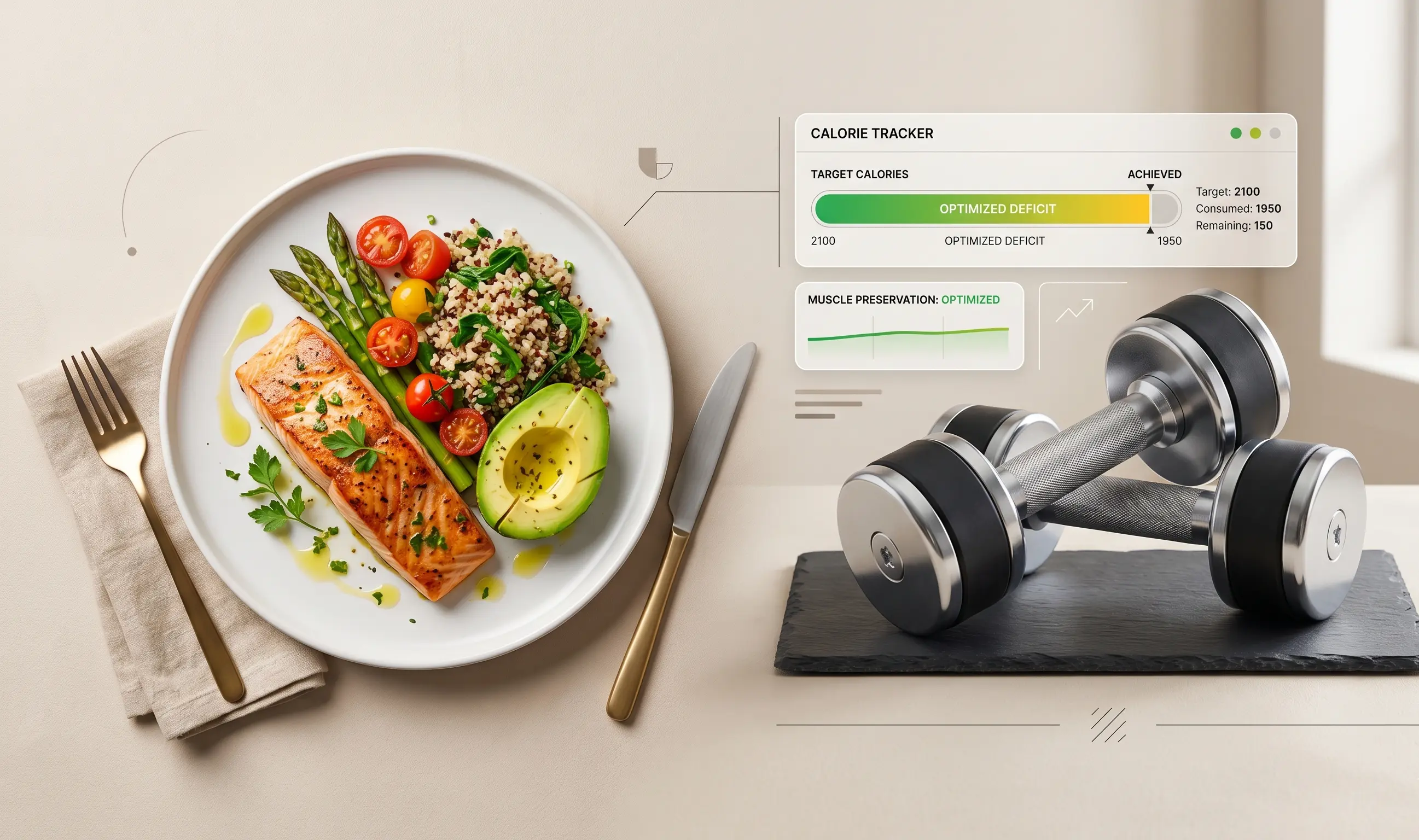
How Many Calories Should You Eat to Lose Weight Without Losing Muscle?
How many calories should I eat to lose weight without losing muscle - the science-backed answer using TDEE, protein targets, and sustainable deficit strategies.