
How Many Calories Do I Burn Lifting Weights for an Hour?
Calorie burn during weight training depends on weight, intensity, and training style. Here's the research-backed breakdown - plus how to factor it into your TDEE.

How many calories do I burn lifting weights for an hour? It's one of the most frequently asked questions in fitness nutrition, and the honest answer is more nuanced than most fitness apps let on. Unlike running or cycling, where calorie burn scales predictably with speed and distance, weight training calorie expenditure depends on multiple factors that interact in complex ways.
The short answer: most people burn between 180 and 450 calories per hour of weight training, depending on their body weight, training intensity, and the type of exercises performed. But the full picture - including the afterburn effect - makes resistance training far more metabolically powerful than this number suggests. Use our TDEE Calculator to factor your weight training into your total daily energy needs.
How Calories Are Burned During Weight Training
During a resistance training session, your body burns calories through two mechanisms:
Active muscle contraction: Each rep requires ATP (adenosine triphosphate) - the body's cellular energy currency - synthesised primarily from glycogen (stored carbohydrate). Heavier loads and more muscle groups recruited = more ATP consumed per rep.
Supporting systems: Even when you're resting between sets, your cardiovascular system is elevated, your core muscles are maintaining posture, and your endocrine system is active (releasing growth hormone and testosterone). These background processes continue burning calories throughout the session.
The ratio of actual lifting time to total session time matters enormously. A powerlifter taking 4-minute rest periods between heavy singles spends very little time under load per hour. A circuit trainer moving between exercises with 30-second rests spends far more.
MET Values for Resistance Training
Researchers use Metabolic Equivalent of Task (MET) values to estimate calorie burn. A MET of 1.0 equals the energy burned sitting quietly. The formula is:
Calories per hour = MET × body weight in kg × 1.05
Standard MET values for resistance training activities:
| Activity | MET Value | |---|---| | Light weight training (circuit, low intensity) | 3.0 | | Moderate weight training (general) | 3.5 | | Vigorous weight training (free weights, intense) | 6.0 | | Powerlifting / heavy compound movements | 6.0 | | Circuit training (minimal rest, cardio-resistance) | 8.0 |
Source: Ainsworth BE et al. Medicine & Science in Sports & Exercise. 2011 Compendium of Physical Activities.
Calorie Burn Estimates by Body Weight
Using moderate weight training (MET 3.5) and vigorous training (MET 6.0):
| Body Weight | 60 min Moderate | 60 min Vigorous | |---|---|---| | 60 kg | ~221 kcal | ~378 kcal | | 70 kg | ~258 kcal | ~441 kcal | | 80 kg | ~294 kcal | ~504 kcal | | 90 kg | ~331 kcal | ~567 kcal | | 100 kg | ~368 kcal | ~630 kcal |
Important caveat: These estimates assume continuous moderate-to-vigorous effort for 60 minutes. Most real gym sessions involve significant rest periods, meaning actual calorie burn is typically at the lower end for a given body weight.
The EPOC Effect: Afterburn Adds Up
One of the most important aspects of weight training's caloric impact is Excess Post-Exercise Oxygen Consumption (EPOC) - commonly called the "afterburn effect."
After a resistance training session, your body continues to consume elevated amounts of oxygen for hours as it:
- Replenishes ATP and phosphocreatine stores
- Clears metabolic byproducts (lactate, hydrogen ions)
- Synthesises new muscle protein
- Restores hormonal baseline (cortisol, growth hormone normalisation)
- Repairs micro-tears in muscle fibre
Research published in the European Journal of Applied Physiology found that EPOC following vigorous resistance training adds 6-15% to the total calorie cost of a session - meaning a 400-calorie session may contribute an additional 24-60 calories over the next 24-48 hours.
For high-intensity training protocols (supersets, drop sets, rest-pause training), EPOC can be even more significant, extending elevated oxygen consumption for up to 38 hours post-exercise.
Compound vs. Isolation Movements: Which Burns More?
The biggest driver of within-session calorie burn is muscle mass recruited. Multi-joint compound exercises engage far more muscle simultaneously than isolation exercises:
High calorie burn (compound):
- Barbell squat - recruits quads, hamstrings, glutes, spinal erectors, core
- Deadlift - entire posterior chain plus grip
- Bench press - chest, shoulders, triceps
- Pull-ups / barbell rows - back, biceps, rear deltoids, core
Lower calorie burn (isolation):
- Bicep curls - primarily biceps only
- Leg extensions - isolated quad activation
- Cable tricep pushdowns - triceps in isolation
A training session built around compound movements will burn significantly more calories than one focused on machine isolation exercises, even with identical volume (sets × reps × weight).
How to Factor Weight Training into Your TDEE
This is where most people make a critical mistake. The activity multipliers used in TDEE calculators - Sedentary (1.2×), Lightly Active (1.375×), etc. - are designed to capture your overall daily movement pattern, not just structured exercise.
For someone who sits at a desk all day but goes to the gym 4 days per week:
- Base case: Sedentary (1.2×) reflects the desk job
- Accounting for gym: Lightly Active (1.375×) or Moderately Active (1.55×) if gym sessions are intense
A practical rule: add your gym sessions to your baseline activity level. If you're sedentary but train 3-4 hours per week:
- Total weekly training calories: 70 kg × 3.5 MET × 1.05 × 4 hours ≈ 1,030 kcal/week
- Daily additional burn: ~147 kcal/day
- This shifts you from Sedentary (1.2×) toward Lightly Active (1.375×) but not fully
Our TDEE Calculator lets you select the activity level that best reflects your real lifestyle. Most gym-goers should select Lightly Active if they train 1-3 days per week and Moderately Active for 3-5 sessions. Very few people qualify as "Extra Active" (1.9×) - that level is reserved for those with physical jobs and daily hard training.
What the Research Says About Weight Training and Metabolism
Beyond immediate calorie burn, consistent resistance training has a compounding metabolic benefit: it increases your Basal Metabolic Rate (BMR).
Each kilogram of muscle tissue burns approximately 13 kcal per day at rest, compared to about 4.5 kcal per day for a kilogram of fat. Building 5 kg of lean muscle over 12-18 months of consistent training raises your resting metabolism by roughly 65 kcal/day - effectively eating an extra meal's worth of calories each week without changing anything else.
This is why the BMR Calculator and TDEE recalculation matter as your body composition changes: a more muscular physique has a meaningfully higher energy requirement, and your calorie targets should reflect that.
Practical Takeaways
- Expect 200-450 kcal burned per hour of genuine moderate-to-vigorous weight training, depending on your body weight and session intensity.
- Add 10-15% for EPOC - particularly after high-intensity or high-volume sessions.
- Compound movements burn more than isolation exercises for the same time investment.
- Use the TDEE activity multiplier honestly - most gym-goers are Lightly to Moderately Active, not Very or Extra Active.
- Recalculate your TDEE every 4-8 weeks as your body composition shifts with training.
For a personalised estimate of your total daily calorie needs including your training, use our TDEE Calculator. Pair it with our Protein Calculator to ensure you're consuming enough protein to support the muscle recovery that makes all those calories worthwhile.
Sources & Further Reading
- Harvard Health calorie burn estimates by body weight
- Excess Post-exercise Oxygen Consumption (EPOC) - PubMed
- Ainsworth BE et al. 2011 Compendium of Physical Activities. Medicine & Science in Sports & Exercise. 2011.
RECOMMENDED TOOL
Ready to calculate?
Related Articles

Body Fat Percentage Ranges by Age - What Is Healthy for Men and Women?
Healthy body fat percentage range for men and women by age - including the US Navy measurement method, ACE categories, and what your number actually means.

How to Fix a Ruined Sleep Schedule in 2 Days - Science-Backed Methods
How to fix a ruined sleep schedule in 2 days using evidence-based circadian reset techniques - sleep cycles, light exposure, and strategic timing.
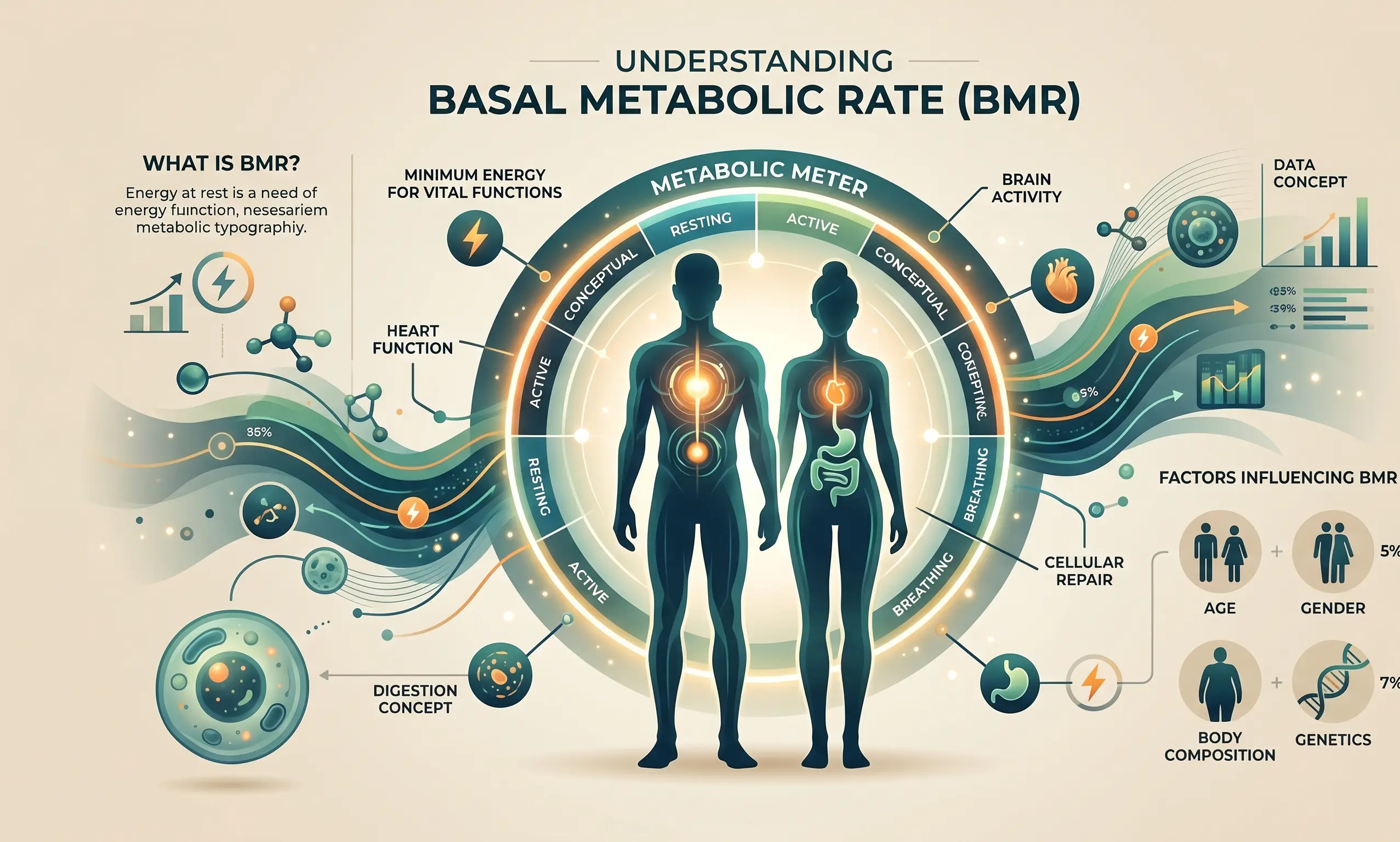
What Is Basal Metabolic Rate and How Do You Increase Your Metabolism?
What is basal metabolic rate and how to increase metabolism naturally - the science behind BMR, what affects it, and evidence-based methods to boost it.