
How Many Calories Do You Burn Lifting Weights for an Hour?
The science-backed answer to calorie burn during weight training - TDEE, metabolic rate, and how to calculate your exact daily energy needs.

How many calories do I burn lifting weights for an hour is one of the most Googled fitness questions - and the answer is far more variable than most people expect. The honest short answer: between 180 and 450 calories per hour, depending on your body weight, training intensity, exercise selection, and rest periods. Understanding why that range is so wide helps you make smarter decisions about nutrition and energy balance.
Lifting weights burns fewer calories during the session than running or cycling at the same duration - but the downstream metabolic effects (elevated post-exercise oxygen consumption and muscle tissue maintenance) make resistance training a uniquely powerful tool for long-term fat loss. Use our free TDEE Calculator to find your total daily energy expenditure, which accounts for all your activity - not just gym sessions.
The Short Answer - It Depends on These 4 Factors
1. Body weight: Larger bodies burn more calories doing any physical activity. A 100 kg person lifts more total weight when moving their own body and generates more metabolic heat than a 60 kg person doing identical exercises.
2. Training intensity: Light machine work (3 sets of 12 at 50% max) burns roughly half the calories of heavy compound barbell training (5 sets of 5 at 85% max). The higher the relative load, the more muscle fibres recruited, and the higher the metabolic cost.
3. Exercise selection: Compound movements (squat, deadlift, bench press, row, overhead press) recruit significantly more muscle mass than isolation exercises (curls, lateral raises). More muscle engaged = more calories burned.
4. Rest periods: Short rest periods (30-60 seconds) keep heart rate elevated and increase total caloric expenditure. Long rest periods (3-5 minutes, common in strength training) lower the aerobic demand considerably.
MET Values for Different Types of Weight Training
Exercise scientists use MET values (Metabolic Equivalent of Task) to standardise calorie estimates across body sizes. One MET equals your resting metabolic rate (approximately 1 kcal/kg/hour).
Calories burned = MET × Body weight (kg) × Duration (hours)
| Training Style | MET Value | Calories/hour (80 kg person) | |----------------|-----------|------------------------------| | Light lifting, machines | 3.5 | 280 | | Moderate weight training | 5.0 | 400 | | Heavy compound lifts | 6.0 | 480 | | Circuit training | 8.0 | 640 | | HIIT (weights-based) | 10.0 | 800 | | CrossFit / MetCon | 9.8 | 784 |
Source: Ainsworth et al., Compendium of Physical Activities
A 75 kg person doing moderate weight training for one hour burns approximately 375 calories - less than running at moderate pace (~550 kcal) but more than walking (~225 kcal).
What Is TDEE and Why It Matters More Than Workout Calories
Total Daily Energy Expenditure (TDEE) is the total number of calories your body burns across an entire day - including your basal metabolic rate (BMR), exercise activity thermogenesis (EAT), non-exercise activity thermogenesis (NEAT), and the thermic effect of food (TEF).
For fat loss or muscle gain, TDEE is what matters - not just what you burn in one gym session. A single hour of lifting represents, for most people, 15-25% of their total daily expenditure. The remaining 75-85% comes from BMR (what you burn at rest) and everyday movement.
Use our free TDEE Calculator to calculate your personalised daily energy expenditure based on your weight, height, age, sex, and activity level.
The Mifflin-St Jeor Equation Explained
Your TDEE starts with your Basal Metabolic Rate (BMR) - the calories your body burns just to maintain basic functions at complete rest. The most accurate formula for this is the Mifflin-St Jeor equation, validated in a landmark 1990 study:
For men: BMR = (10 × weight in kg) + (6.25 × height in cm) − (5 × age) + 5
For women: BMR = (10 × weight in kg) + (6.25 × height in cm) − (5 × age) − 161
A 2005 systematic review in the Journal of the American Dietetic Association confirmed that Mifflin-St Jeor predicted BMR within 10% of measured values for 82% of participants - the highest accuracy of any equation for the general population.
Use our BMR Calculator to calculate your resting metabolic rate using this formula.
Once you have your BMR, TDEE is calculated by multiplying by an activity factor:
| Activity Level | Multiplier | |----------------|------------| | Sedentary (desk job, no exercise) | × 1.2 | | Lightly active (1-3 days/week exercise) | × 1.375 | | Moderately active (3-5 days/week) | × 1.55 | | Very active (6-7 days/week hard training) | × 1.725 | | Extra active (physical job + training) | × 1.9 |
Calorie Deficit for Fat Loss While Lifting
For fat loss, you need to consume fewer calories than your TDEE. The optimal deficit when lifting weights is 250-500 kcal per day below TDEE, which produces approximately 0.25-0.5 kg of fat loss per week.
A larger deficit (750-1,000 kcal) risks muscle loss, reduced training performance, hormonal disruption, and the metabolic adaptation that makes continued fat loss harder over time.
Use our Calorie Calculator to find your specific target based on your goal (maintenance, weight loss, or muscle gain).
Critical point for lifters: Your gym session calories are already accounted for in your TDEE if you selected an accurate activity level. Don't "eat back" your workout calories if you used the TDEE activity multipliers correctly - those multipliers already include your training.
How to Track Calorie Burn Accurately
Wearable heart rate monitors (Apple Watch, Garmin, Fitbit) estimate calories using heart rate and your basal metabolic data. Research shows wearables tend to overestimate resistance training calories by 20-35% because the heart rate-to-calorie algorithms are calibrated for aerobic exercise.
The most accurate method: Use your TDEE (calculated from validated equations like Mifflin-St Jeor) rather than wearable outputs. Track your actual weight changes over time - if your weight stays constant at a given calorie intake, that intake is your maintenance. Adjust by 250-500 kcal from there.
Body weight is the ultimate measure: Weigh yourself daily, take the weekly average. If the weekly average is dropping by 0.25-0.5 kg per week, your deficit is working. If it's not moving, reduce intake by 100-150 kcal/day and reassess in 2 weeks.
Frequently Asked Questions
Does lifting weights burn more calories than cardio? During the session, typically no - a comparable duration of moderate-intensity cardio burns 20-40% more calories than weight training. However, lifting increases your resting metabolic rate (by building muscle), whereas steady-state cardio has minimal effect on BMR.
How many calories does 30 minutes of weight training burn? Approximately 90-240 kcal for a 70-80 kg person, depending on intensity. Half the figures in the MET table above.
Does muscle burn more calories than fat at rest? Yes - but less than popularly claimed. One kilogram of muscle burns approximately 13 kcal/day at rest; one kilogram of fat burns about 4.5 kcal/day. Gaining 5 kg of muscle (a significant achievement) adds only ~85 kcal/day to your BMR.
How long does post-workout calorie burn (EPOC) last? Excess Post-Exercise Oxygen Consumption (EPOC) elevates calorie burn for 24-48 hours after heavy resistance training. The effect is real but modest - research suggests 50-150 extra calories over 24 hours after a hard strength session.
Should I eat before lifting to burn more fat? Fasted training slightly increases fat oxidation during the session, but total daily fat loss is determined by the 24-hour calorie balance - not the fuel source used during a single session. Eat in a way that supports your training performance.
Sources & Further Reading
RECOMMENDED TOOL
Ready to calculate?
Related Articles

Body Fat Percentage Ranges by Age - What Is Healthy for Men and Women?
Healthy body fat percentage range for men and women by age - including the US Navy measurement method, ACE categories, and what your number actually means.

How to Fix a Ruined Sleep Schedule in 2 Days - Science-Backed Methods
How to fix a ruined sleep schedule in 2 days using evidence-based circadian reset techniques - sleep cycles, light exposure, and strategic timing.
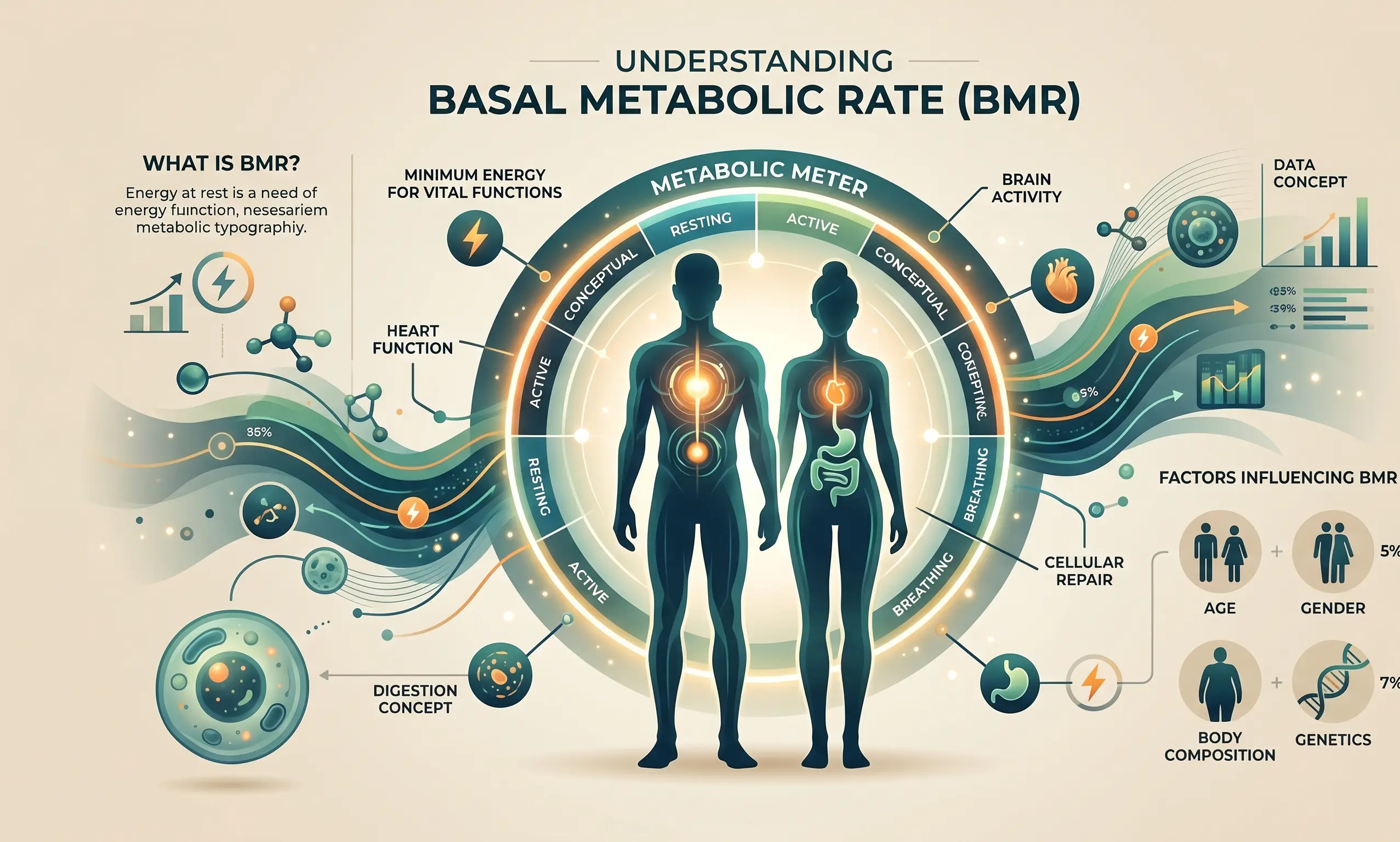
What Is Basal Metabolic Rate and How Do You Increase Your Metabolism?
What is basal metabolic rate and how to increase metabolism naturally - the science behind BMR, what affects it, and evidence-based methods to boost it.