
High Protein Macro Split for Skinny Fat Transformation
Skinny fat is one of the most misunderstood body types in fitness. Here's the exact macro split and protein strategy that drives real body recomposition - backed by science.
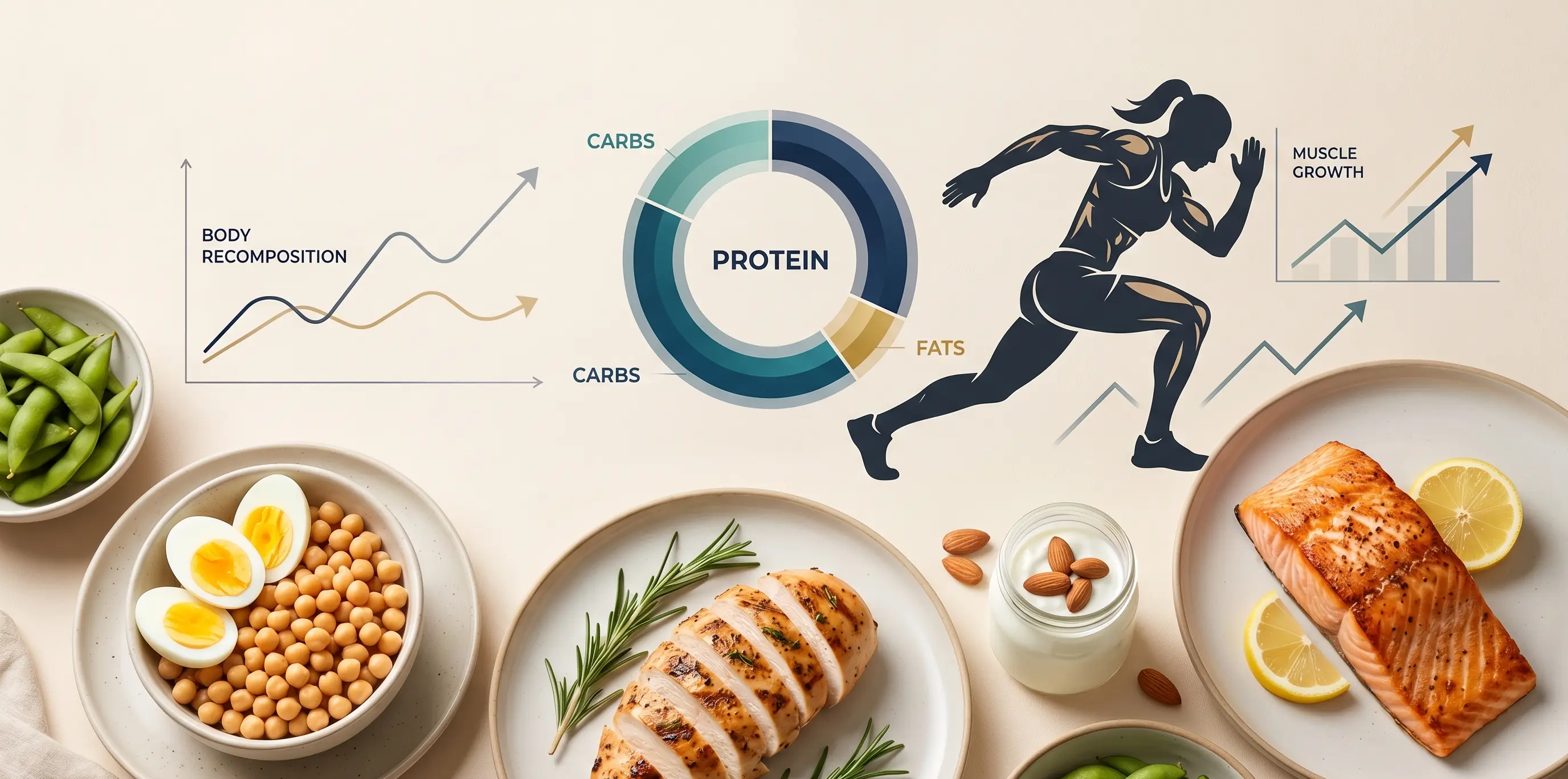
The skinny fat body type - normal or below-average weight, but with low muscle mass and higher-than-ideal body fat percentage - is one of the most confusing situations in fitness nutrition. You're not technically overweight, but you don't feel lean or athletic either. Conventional weight loss advice says "eat less." Conventional muscle building advice says "eat more." Neither feels right when you need to do both at once.
The solution is body recomposition: simultaneously building muscle and losing fat. And the most critical nutritional lever for making it work is a high-protein macro split. Use our Protein Calculator to find your personalised targets, then read on for the full strategy.
What Is the Skinny Fat Physique?
"Skinny fat" is not a clinical term, but it describes a genuinely distinct body composition pattern:
- Low muscle mass - insufficient lean tissue from lack of resistance training or protein under-consumption
- Above-normal body fat - particularly visceral (abdominal) fat, often 25-30%+ in men or 30-35%+ in women
- Normal or slightly low BMI - scale weight doesn't reveal the composition problem
This combination - technically a normal weight with unfavourable body composition - is sometimes called normal weight obesity in clinical literature and is associated with elevated metabolic risk despite "healthy" BMI numbers.
The causes are usually a combination of: sedentary lifestyle, inadequate protein intake, high refined carbohydrate consumption, and insufficient resistance training.
Why Body Recomposition Works Best for Skinny Fat
For most people, you can't gain muscle and lose fat simultaneously - one state requires a calorie surplus, the other a deficit. Except for two specific groups:
- Beginners to resistance training (first 12-24 months)
- People with above-normal body fat (men >20%, women >28%)
The skinny fat person typically meets both criteria. They have enough stored energy (body fat) to fuel muscle protein synthesis without a dietary surplus, and their muscles are highly responsive to the training stimulus due to being untrained.
This makes body recomposition not just possible but the optimal strategy.
The High Protein Macro Split for Skinny Fat
Protein is the non-negotiable foundation. Research consistently shows that high protein intake:
- Maximises muscle protein synthesis (MPS) - the cellular process that builds muscle
- Preserves muscle tissue during a calorie deficit (critical for recomposition)
- Increases satiety significantly more than carbs or fat - helping manage calories without hunger
- Has the highest thermic effect of any macronutrient (~25-30% of calories consumed are burned in digestion)
Target protein intake for skinny fat recomposition: 2.0-2.4 g per kg of body weight
This is intentionally at the upper end of the evidence-based range (1.6-2.2 g/kg for muscle building per the 2017 ISSN position stand), because the calorie-restricted context of recomposition means some dietary protein will be burned for energy rather than used for muscle synthesis. Higher intake compensates.
Use our Protein Calculator set to "Build Muscle" goal to calculate your target in grams per day.
Example: 75 kg Skinny Fat Individual
- Protein target: 75 kg × 2.2 g/kg = 165 g/day
- TDEE at moderate activity: ~2,400 kcal (calculated via TDEE Calculator)
- Calorie target for recomp: TDEE - 200 to 300 kcal = 2,100-2,200 kcal/day
The mild deficit (200-300 kcal below TDEE) is intentional. A larger deficit (500+ kcal) risks muscle loss during the untrained phase - exactly what you want to avoid.
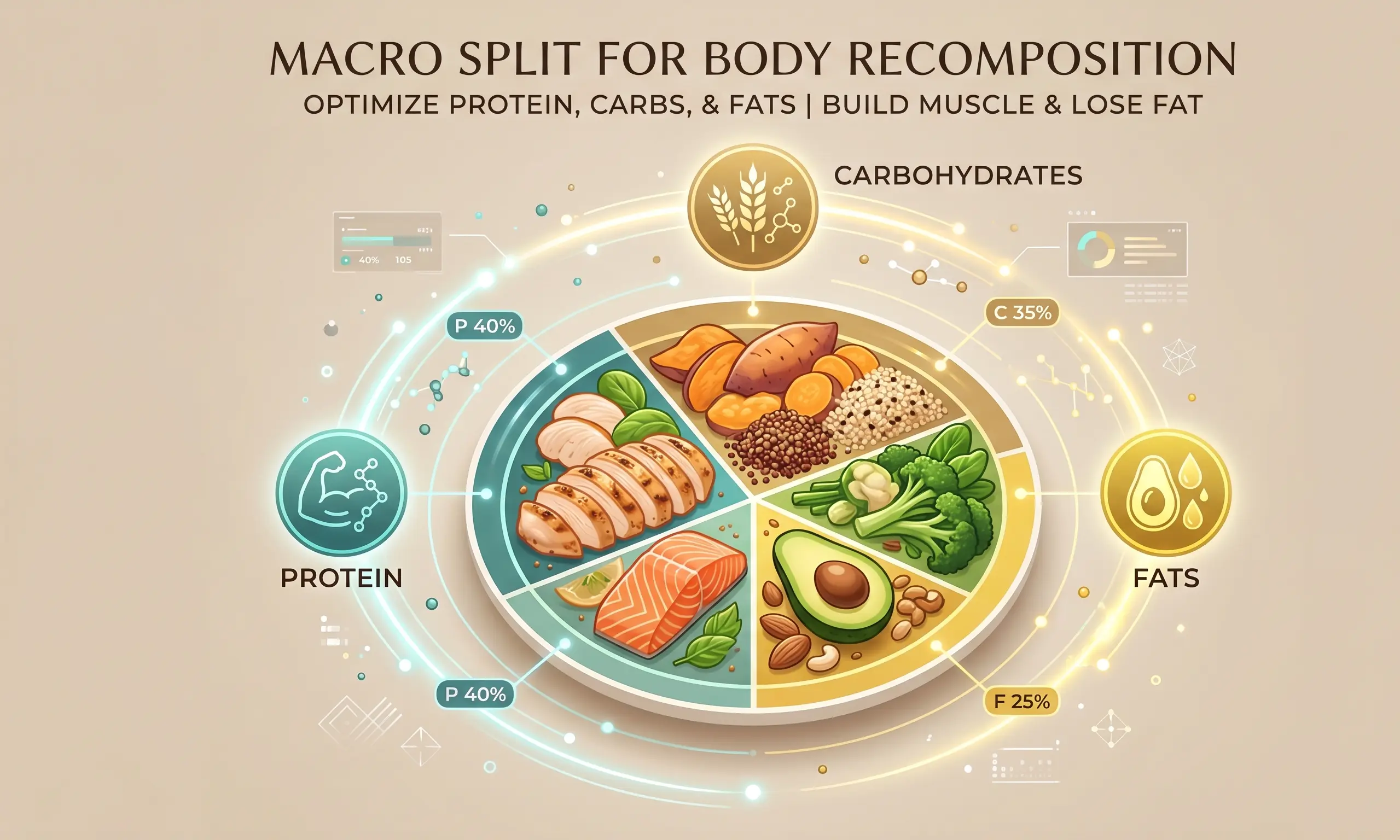
The Macro Split (as % of calories):
| Macronutrient | Percentage | Grams (2,200 kcal) | |---|---|---| | Protein | 30% | 165 g | | Carbohydrates | 42% | 231 g | | Fat | 28% | 68 g |
Notes on this split:
- Protein is set first at the gram target, then converted to a percentage
- Carbohydrates are kept moderate-to-high to fuel training sessions and support muscle glycogen
- Fat is kept at a minimum of ~25-28% to support hormone production (testosterone, oestrogen), fat-soluble vitamin absorption, and food palatability
Protein Timing and Distribution
Getting 165 g of protein into your day is easier said than done - particularly if you're not used to high-protein eating. The research on protein distribution suggests spreading intake across 4-5 meals or eating windows, each providing 30-40 g of protein:
| Meal | Protein Target | Example | |---|---|---| | Breakfast | 35-40 g | 4 scrambled eggs + Greek yoghurt | | Lunch | 35-40 g | 200 g chicken breast + cottage cheese | | Pre-workout snack | 25-30 g | Protein shake + banana | | Dinner | 40-50 g | 200 g salmon + edamame | | Optional evening | 20-25 g | Casein shake or cottage cheese |
This distribution matters because muscle protein synthesis (MPS) is a pulsatile process - it spikes and falls rather than running continuously. Providing a fresh dose of leucine-rich protein every 3-4 hours keeps MPS elevated throughout the day.
Leucine - found in high concentrations in dairy, eggs, meat, whey protein, and soy - is the amino acid that most directly triggers the mTOR pathway responsible for MPS. Aim for a minimum of 2-3 g of leucine per meal (roughly 30 g of complete protein).
The Role of Carbohydrates in Skinny Fat Recomposition
A common mistake in recomposition is slashing carbohydrates too aggressively. Carbs serve three critical functions for the skinny fat individual:
- Fuel for training - glycogen (stored carbohydrate) is the primary fuel for resistance exercise above 65% of maximum intensity. Low glycogen = lower training quality = less stimulus for muscle growth.
- Protein sparing - adequate carbohydrate intake means protein calories are directed toward muscle synthesis rather than gluconeogenesis (being burned for energy).
- Hormonal support - low-carb diets (<100 g/day) can suppress thyroid function and reduce testosterone in resistance-trained individuals.
Aim for a minimum of 3-4 g of carbohydrates per kg of body weight on training days. On rest days, carbs can be reduced by 20-30% while keeping protein constant.
Training: The Other Half of the Equation
Nutrition is the foundation, but without a progressive resistance training programme, no macro split will produce recomposition results. The training stimulus drives muscle protein synthesis - protein and calories provide the raw materials.
Key training principles for skinny fat recomposition:
- Progressive overload - consistently increase weight, reps, or volume over time
- Compound movements first - squat, deadlift, bench press, overhead press, rows activate the most muscle and drive the highest hormonal response
- 3-4 sessions per week - sufficient frequency to stimulate adaptation without excessive recovery demand
- 8-15 rep ranges - optimal for simultaneous hypertrophy and strength stimulus
Tracking Progress Without Relying on the Scale
Body recomposition is notoriously difficult to track on a standard scale because muscle and fat changes can offset each other - weight stays the same while composition improves significantly. Use these metrics instead:
- Waist measurement - declining waist circumference indicates fat loss
- Chest/arm/shoulder measurements - increasing measurements indicate muscle gain
- Progress photos - monthly photos under consistent lighting reveal changes the mirror misses
- Strength benchmarks - tracking compound lift progression (squat, deadlift, bench) directly measures whether your training stimulus is producing adaptation
Expect the process to take 6-18 months to produce visually significant changes. Body recomposition is slower than aggressive bulking or cutting - but it produces a result closer to what most skinny fat people are actually aiming for.
Summary: The Skinny Fat Nutrition Protocol
- Calculate TDEE with our TDEE Calculator
- Set calories at TDEE - 200 to 300 kcal
- Set protein at 2.0-2.4 g/kg - use our Protein Calculator on "Build Muscle" setting
- Fill remaining calories with ~42% carbohydrates and ~28% fat
- Distribute protein across 4-5 meals per day, 30-40 g each
- Train with progressive resistance exercise 3-4 days per week
- Track waist, photos, and strength - not just scale weight
Sources & Further Reading
- ISSN Position Stand: Protein and Exercise (2017)
- Morton RW et al. A systematic review, meta-analysis and meta-regression of the effect of protein supplementation on resistance training-induced gains in muscle mass and strength. Br J Sports Med. 2018.
- Barakat C et al. Body Recomposition: Can Trained Individuals Build Muscle and Lose Fat at the Same Time? Strength & Conditioning Journal. 2020.
RECOMMENDED TOOL
Ready to calculate?
Related Articles

How Much Water Should You Drink While Taking Creatine?
How much water should I drink while taking creatine - the research-backed answer explaining creatine's effect on water distribution and your personalised hydration target.

How Much Water Should I Drink While Taking Creatine?
Creatine increases intracellular water retention. Here's exactly how to adjust your hydration when supplementing - and why it matters for performance and safety.
The Best Macro Split for Body Recomposition - Lose Fat and Build Muscle
The best macro split to lose fat and build muscle at the same time requires precise protein targets, strategic carbohydrates, and a specific calorie approach.