
How Many Business Days Between Dates? Working Days Guide
A complete guide on calculating business days between dates, excluding weekends, and managing deadlines and project timelines.
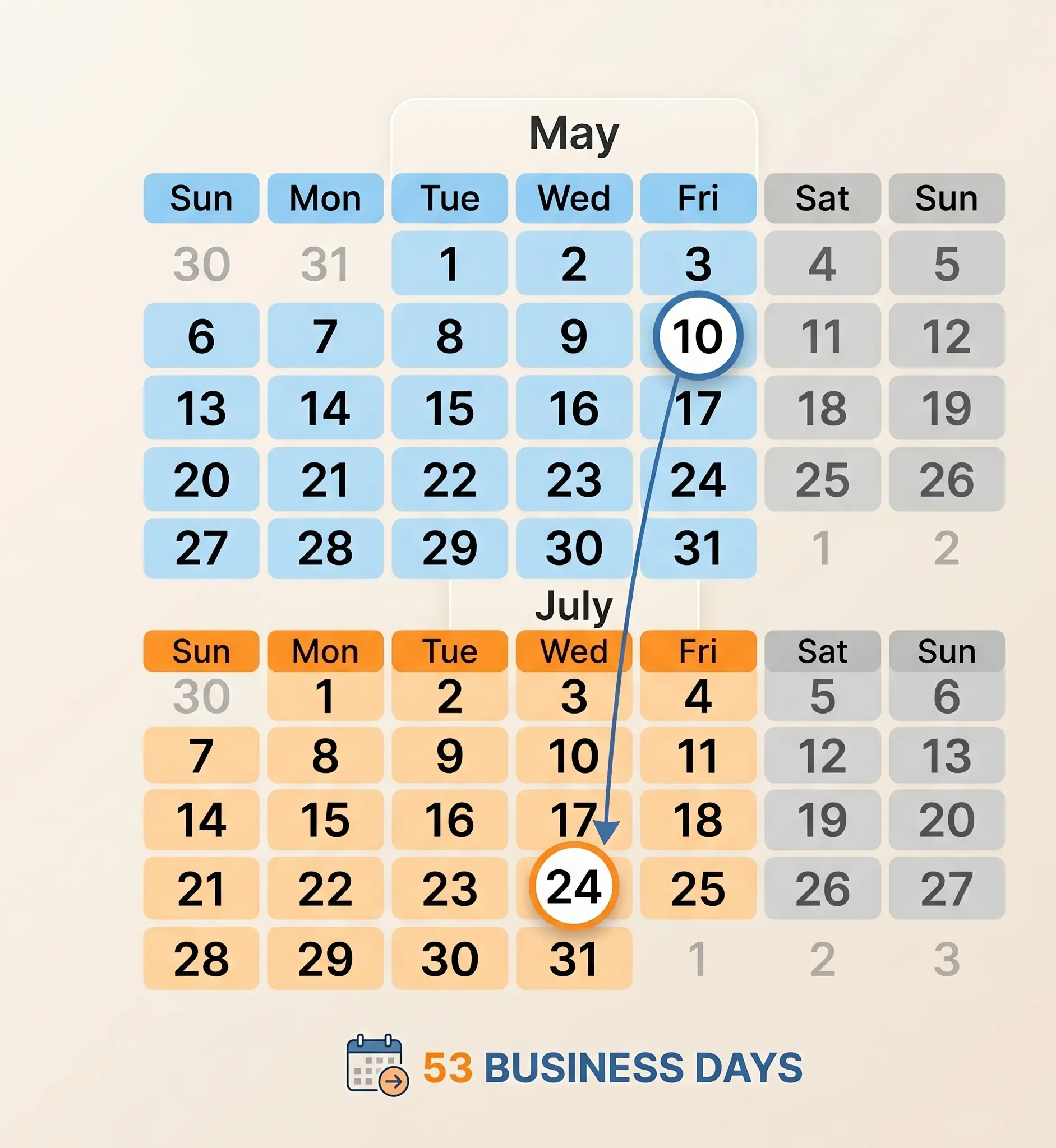
In the professional world, calendar days are rarely the primary measure of progress. Project schedules, contract delivery terms, payment terms (such as Net 30), and shipping estimates are typically calculated using business days (or working days). Business days generally exclude weekends (Saturdays and Sundays). Use our free Day Counter to calculate business days between dates instantly, and read on to learn how to perform these calculations yourself.
Calendar Days vs. Business Days
Understanding the difference between calendar days and business days is key to professional scheduling:
- Calendar Days: Every consecutive day on the calendar, including weekends and public holidays. A week has 7 calendar days.
- Business Days: Only the standard working days of the week, typically Monday through Friday. A standard week has 5 business days.
For example, a shipping estimate of "5 business days" starting on a Friday means the package will arrive on the following Friday (excluding Saturday and Sunday). However, a shipping estimate of "5 calendar days" starting on a Friday means the package will arrive on the following Wednesday.
How to Calculate Business Days Manually
To calculate the number of business days between two dates manually, follow these steps:
- Calculate the total calendar days between the start and end dates.
- Determine the number of full weeks in that range by dividing the total calendar days by 7.
- Multiply the full weeks by 5 to find the business days in those weeks.
- Determine the remaining days (the remainder of the division by 7).
- Check the day of the week for the start and end dates to count how many of the remaining days fall on Monday through Friday.
- Subtract any public holidays that fall on weekdays within the range.
Example: Business days between June 1st (Monday) and June 18th (Thursday)
- Total calendar days (exclusive): $18 - 1 = 17$ days.
- Full weeks: $17 \div 7 = 2$ weeks (with a remainder of 3 days).
- Business days in full weeks: $2 \times 5 = 10$ business days.
- Remaining days: 3 days (after the second full week, which ends on Monday, June 15th). The remaining days are Tuesday (June 16), Wednesday (June 17), and Thursday (June 18). All 3 are weekdays.
- Total Business Days: $10 + 3 = 13$ business days.
Inclusive vs. Exclusive Business Days
Just like calendar days, you must determine whether your calculation is inclusive or exclusive:
- Exclusive (Default): Excludes the start date. This is common in finance and shipping (e.g., "funds will arrive 2 business days after transfer").
- Inclusive: Includes both the start and end dates. This is common in project scheduling (e.g., "this development sprint runs from Monday to Friday, lasting 5 business days").
Our free online Day Counter allows you to check or uncheck "Include End Date" to easily switch between these calculation modes.
Related Calculators
If you are scheduling projects or deadlines, these tools can help:
- Date Calculator: Add or subtract days, weeks, months, or years to/from any date.
- Day of Week Calculator: Find the day of the week for any date.
- Time Duration Calculator: Calculate elapsed hours, minutes, and seconds between dates.
Calculate the exact working days for your project or invoice using the Day Counter.
RECOMMENDED TOOL
Ready to calculate?
Related Articles
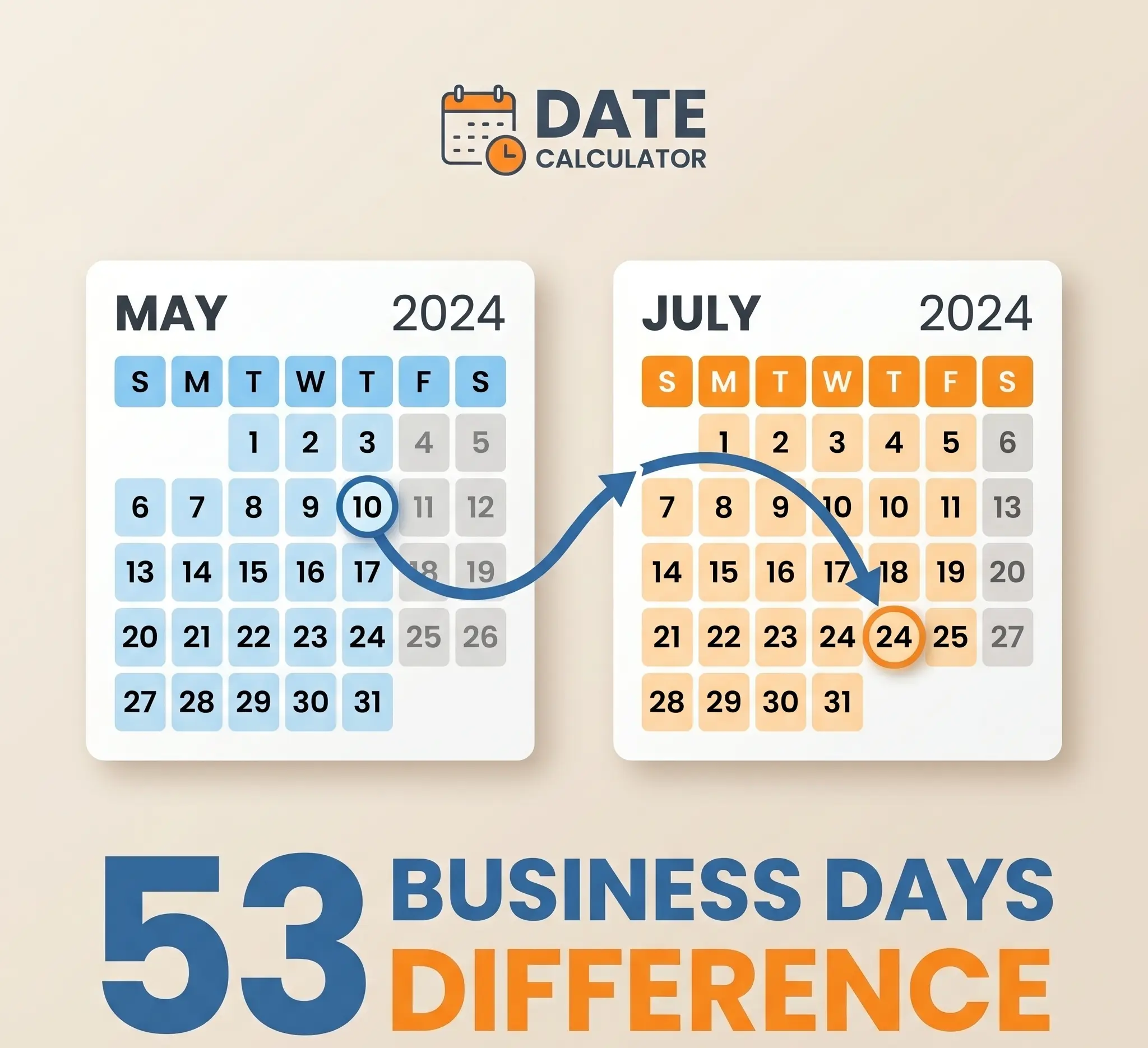
How Many Days Between Two Dates? A Guide to Calendar Calculations
Learn how to calculate the exact number of days between two calendar dates, understand inclusive vs. exclusive counting, and how leap years affect duration.
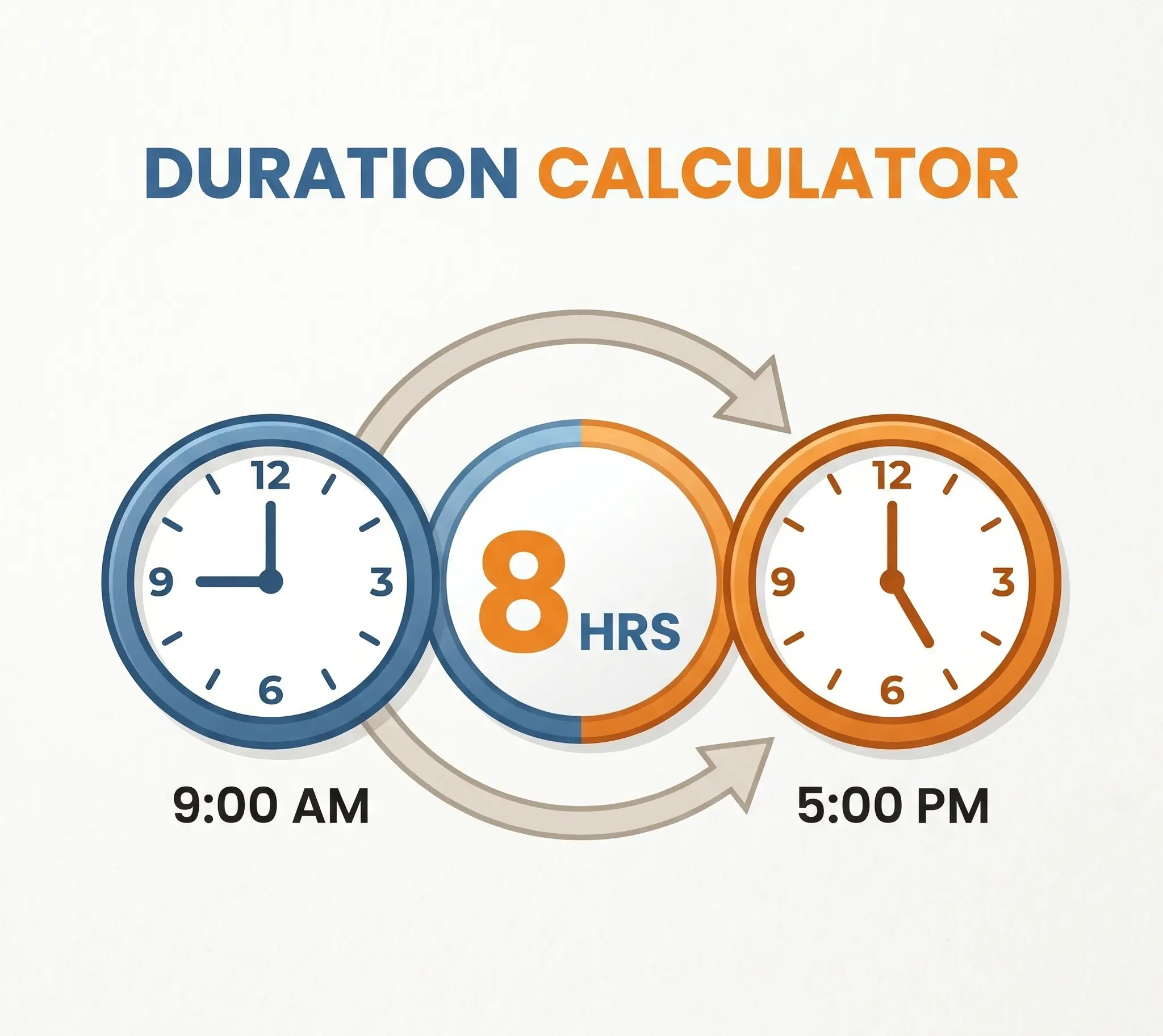
How Many Hours Between Two Times? Shift & Work Hours Guide
Learn how to calculate the exact hours worked between two times, deduct break times, handle shifts that cross midnight, and convert to decimal hours.
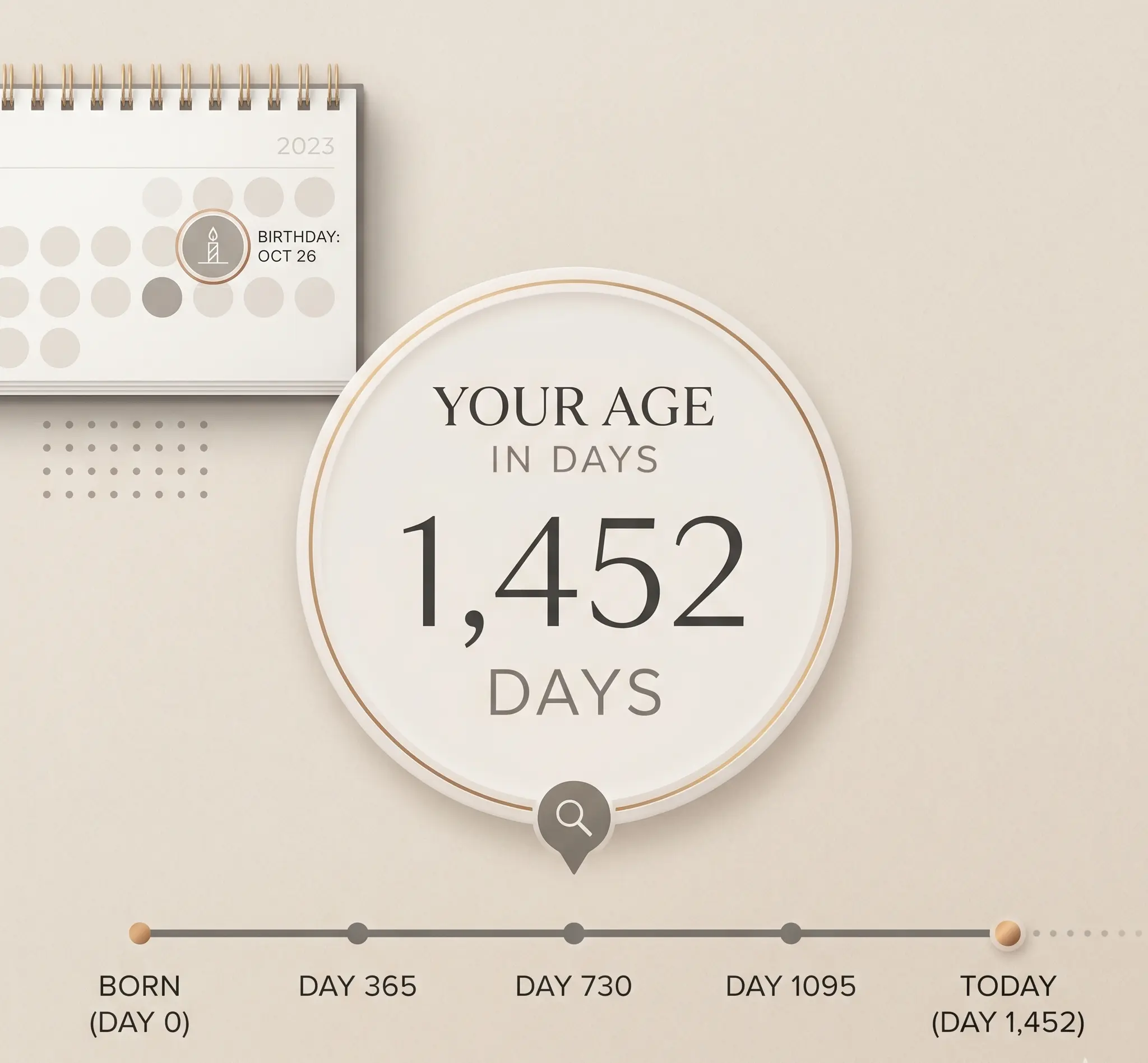
How Old Am I in Days? The Math Behind Your Life in Days, Hours, & Weeks
Calculate your exact age in days, weeks, and hours. Learn the exact calendar arithmetic of leap years and find your next birthday countdown.